Hello, readers!
This will likely be the last post for this year, and hopefully the new year will be much more active with my musings! Thank you all for reading, commenting over on Google+, and all such things.
Today I'd like to talk about an issue that I have come across once or twice in my earlier career as a Game-Master and have been trying my best to avoid ever-since. Sometimes it's an isolated incident that can be plowed through and hopefully forgotten. Other times, it's a situation that lingers and seems to get worse and worse as time goes on. I'll try to explain the issue below and see if I can brainstorm some ideas to avoid or lessen this problem.
I speak, of course, of NPC overload.
The first four years of gaming that I experienced through High School was dominated by Star Wars games. Our group started with the Revised Core Rulebook, and eventually migrated to Saga after realizing how much better it handled the universe. Edition isn't important, however, especially in regards to this topic. I bring up Star Wars because there was one major element that groups that contained one Jedi or more had to encounter at some point.
Jedi Council meetings.
I mean, you can't just have some semi-important Jedi running around without having to report to a Council eventually, and how many times can you say that most of the delegates are gone? Therefore, the players have to approach the Council and discuss their mission or ask for something, and you as the GM have to play all of them. Needless to say, it can be daunting, even if you have a cheat sheet with the names of various council members and maybe one or two adjectives to describe their personality.
No matter how good your Yoda voice is, you start to sound like you have really severe schizophrenia, and it can be boggling for both you and your players. Let's not even get into what happens when parts of the council start to disagree and you wind up having an argument with yourself while your players stare at you funny.
Unfortunately, this isn't limited to just meetings of a body of delegates. This can happen any time there is more than one important NPC in a scene that requires interaction. Try running the Masters of Evil and suddenly you have to speak for a bunch of villains at once. Or maybe there's an NPC in the party, and they have an important connection to a villain, and you find yourself talking to yourself again while the players sit back and watch.
I call this NPC overload, which can either mean one of two things.
1: You have the party interacting with a large group of different NPCs, or NPCs are interacting with each other for an extended period of time.
2: The actions of NPCs in interactions are so detailed and complicated that it leaves the players out of important events.
Obviously, a good GM should avoid #2 at all costs and try to involved the player's as much as possible, even when two NPCs are spatting or having an argument. Players should always be the focus of events, and if the other characters are getting in the way of that, things need to be rearranged. If you're just going to have a bunch of your characters doing important things, why not write a book instead of running a game?
However, #1 can be an issue for even seasoned GM's at one point or another. What can we do to mitigate this problem, or make it more accessible/enjoyable for all involved?
Here are some suggestions:
1: In a meeting/summit/council type situation where all of the members are pretty much in agreement, simply divide up answers between council members/voices. Maybe the first one on the list answers the first question, or two and three make a point together in response to something a player said. It takes getting used to at first, but this generally helps these difficult events flow, at the very least.
2: If two NPCs are arguing, involve the players between every back and forth. Give them a chance to interject what they think, end the argument, or support one side or another. If you feel like you've been talking to yourself for too long, you probably have been.
3: Limit your active NPCs per scene. Any more than two can get complicated, and three's a crowd. Make sure your players are the center of every scene, even when dealing with very important characters like the main villain or the ruler of the land.
3.5: Don't send a group when one can do the job. (For non-combat, anyway.)
For myself, this issue has mostly been resolved, either by avoidance or using some of the strategies above to make it tolerable. However, since I haven't talked at length with too many game-masters about this side of the hobby, I'm not sure if this is just me, or a further epidemic! Let me know if this comes up in your games, and how you handle it!
Hope you enjoyed this little article on NPC overload. If not, here's a funny picture.
-Wes
Showing posts with label gm. Show all posts
Monday, December 30, 2013
Sunday, June 30, 2013
Action's Missing Element
Hey, readers!
Before we get going into the meat of this editorial of sorts, I am here to tell you that this is a sister article to an early post entitled "Why Do People Still Enjoy Action?" If you have not read through that piece yet, please go to the right and read it quickly before delving into the stuff here, since this is a sort-of spiritual follow-up.
With that being said, let's dig into the meat of my revelations.
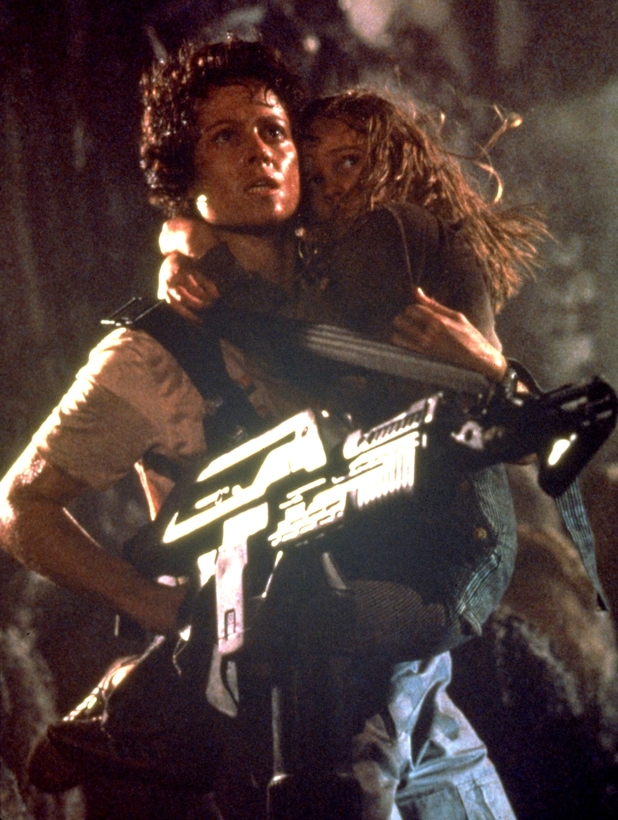
I was flipping channels, as I typically do during afternoons when I am bored and have already watched all of my recorded stuff, and I stumbled upon the climax of Aliens. Having loved this film and its predecessor, I decided to catch the end where Ripley and Newt scramble through the station to escape its detonation, being chased by the Alien Queen. Even though I was catching it at the end, I felt myself very engaged with what was going on, and instead of flipping to something else, I stayed until the credits.
After turning my brain back on, I realized something.
Aliens is almost as iconic as you can get as far as action movies are concerned, and even after seeing it many times, I was not bored. I was excited. I cared about these characters and what was going on, even after just jumping in, and it was the mind-numbing action that I railed against in that last article.
In fact, some of my favorite movies have heavy amounts of action, such as Star Wars, or the Matrix. Despite the fact that these are now considered classics, there has to be something there that makes the action feel fresh every time instead of the recycled, explosion-heavy bad-assery that seems to have dominated action films this past decade or so.
So, what's the missing element? And is it also missing in our roleplaying sessions?
I've figured it out, and it's rather simple.
Tension; that's the missing element.
The three movies I've mentioned above work tension into their films almost flawlessly at just the right moments, making the action engaging and generating care for the characters if you liked them enough. In Aliens, Ripley may have her awesome gun, but she knows that both she and Newt are toast if the Alien Queen catches up to them, and the audience knows it too. In Star Wars, the Rebel Alliance is about to get their base destroyed by the Death Star, and they only have one shot to do an incredibly tricky maneuver against a huge amount of opposition. I still get goosebumps during the trench run. In the Matrix, everyone (except Neo, but we don't find that out until the end) are basically powerless to stop the Agents, so whenever they show up, the main characters are in serious trouble.
(Minor summer movie spoilers ahead for Star Trek: Into Darkness and Man of Steel)
Now let's contrast these elements against a few of the big summer blockbusters that are making their run this year. Was there tension in Star Trek: Into Darkness? At points, yes, but that is cheapened quite a bit when the back of your mind is reminding you constantly, 'They can't kill off Kirk. That would end the franchise. How are they gonna bring him back?' What about Man of Steel, which is likely going to be the highest grossing action film this year next to Iron Man 3? Well, it's kind of hard to feel tension when two incredibly super-powered people are punching each other through buildings with little regard for those who get in the way. That's not to say they didn't try, what with the 'Kryptonite-esque' aspects of the big planet-terraformer machine, but if memory serves, that didn't slow Superman down all that much.
Let's bring this back to roleplaying, shall we?
To me, it seems that GM's often sit in either one of two camps. Either they are looking to make everything as challenging as possible to compete with the players in some magnitude, or they are rather lenient, hold back, and put the story first. Are there some that sit between them? Undoubtedly, there has to be, but that is the breakdown I often see.
(This also depends highly on what system you are running, but I'm going to assume the lowest common denominator here. If you are running something ala Call of Cthulhu, your tension problems are taken care of by nature of the system itself.)
More often than not, I'm sitting in the second camp, but honestly? I don't want to anymore. That's because of this book.
I really don't want to steal this guy's thunder by reiterating everything he says in this book, but let me present this to you. Do you want action that is meaningful? Do you want your players to be engaged? Do you want to put the missing element of tension inside your games again, make them feel more alive?
Follow this man's advice: play dirty. Push your player characters to the limit. Provide consequences! While it may seem like an assholish way to run games at first, the rewards are incredible, and in the end, your players will thank you if they give enough of a damn.
I know I'm not providing a lot of my own advice on how to interweave tension into your games, but that is because I cannot do it better than this man has done. My goal is for your to walk away with two things: to think about how vital tension and suspense is to meaningful action, and to consider finding a way to read this book. It's that good.
I hope you enjoyed this semi-follow-up! If not, here's a funny picture.
-Wes
Before we get going into the meat of this editorial of sorts, I am here to tell you that this is a sister article to an early post entitled "Why Do People Still Enjoy Action?" If you have not read through that piece yet, please go to the right and read it quickly before delving into the stuff here, since this is a sort-of spiritual follow-up.
With that being said, let's dig into the meat of my revelations.
I was flipping channels, as I typically do during afternoons when I am bored and have already watched all of my recorded stuff, and I stumbled upon the climax of Aliens. Having loved this film and its predecessor, I decided to catch the end where Ripley and Newt scramble through the station to escape its detonation, being chased by the Alien Queen. Even though I was catching it at the end, I felt myself very engaged with what was going on, and instead of flipping to something else, I stayed until the credits.
After turning my brain back on, I realized something.
Aliens is almost as iconic as you can get as far as action movies are concerned, and even after seeing it many times, I was not bored. I was excited. I cared about these characters and what was going on, even after just jumping in, and it was the mind-numbing action that I railed against in that last article.
In fact, some of my favorite movies have heavy amounts of action, such as Star Wars, or the Matrix. Despite the fact that these are now considered classics, there has to be something there that makes the action feel fresh every time instead of the recycled, explosion-heavy bad-assery that seems to have dominated action films this past decade or so.
So, what's the missing element? And is it also missing in our roleplaying sessions?
I've figured it out, and it's rather simple.
Tension; that's the missing element.
The three movies I've mentioned above work tension into their films almost flawlessly at just the right moments, making the action engaging and generating care for the characters if you liked them enough. In Aliens, Ripley may have her awesome gun, but she knows that both she and Newt are toast if the Alien Queen catches up to them, and the audience knows it too. In Star Wars, the Rebel Alliance is about to get their base destroyed by the Death Star, and they only have one shot to do an incredibly tricky maneuver against a huge amount of opposition. I still get goosebumps during the trench run. In the Matrix, everyone (except Neo, but we don't find that out until the end) are basically powerless to stop the Agents, so whenever they show up, the main characters are in serious trouble.
(Minor summer movie spoilers ahead for Star Trek: Into Darkness and Man of Steel)
Now let's contrast these elements against a few of the big summer blockbusters that are making their run this year. Was there tension in Star Trek: Into Darkness? At points, yes, but that is cheapened quite a bit when the back of your mind is reminding you constantly, 'They can't kill off Kirk. That would end the franchise. How are they gonna bring him back?' What about Man of Steel, which is likely going to be the highest grossing action film this year next to Iron Man 3? Well, it's kind of hard to feel tension when two incredibly super-powered people are punching each other through buildings with little regard for those who get in the way. That's not to say they didn't try, what with the 'Kryptonite-esque' aspects of the big planet-terraformer machine, but if memory serves, that didn't slow Superman down all that much.
Let's bring this back to roleplaying, shall we?
To me, it seems that GM's often sit in either one of two camps. Either they are looking to make everything as challenging as possible to compete with the players in some magnitude, or they are rather lenient, hold back, and put the story first. Are there some that sit between them? Undoubtedly, there has to be, but that is the breakdown I often see.
(This also depends highly on what system you are running, but I'm going to assume the lowest common denominator here. If you are running something ala Call of Cthulhu, your tension problems are taken care of by nature of the system itself.)
More often than not, I'm sitting in the second camp, but honestly? I don't want to anymore. That's because of this book.
I really don't want to steal this guy's thunder by reiterating everything he says in this book, but let me present this to you. Do you want action that is meaningful? Do you want your players to be engaged? Do you want to put the missing element of tension inside your games again, make them feel more alive?
Follow this man's advice: play dirty. Push your player characters to the limit. Provide consequences! While it may seem like an assholish way to run games at first, the rewards are incredible, and in the end, your players will thank you if they give enough of a damn.
I know I'm not providing a lot of my own advice on how to interweave tension into your games, but that is because I cannot do it better than this man has done. My goal is for your to walk away with two things: to think about how vital tension and suspense is to meaningful action, and to consider finding a way to read this book. It's that good.
I hope you enjoyed this semi-follow-up! If not, here's a funny picture.
-Wes
Labels:
action,
gamemastering,
gm,
play dirty,
roleplaying,
rpg,
tension
Subscribe to:
Posts (Atom)